News & Events
2026-05-12: Annual Report 2024-25
Institute of Water Modelling (IWM) Annual Report 2024–2025 presents a comprehensive account of the organization's technical achievements, research initiatives, institutional developments, and strategic collaborations over the fiscal year. Established in December 1996 as an independent Trust under the Government of the People's Republic of Bangladesh, IWM operates as a nationally and internationally recognized Centre of Excellence in water resources management, environmental science, and climate-resilient development. The report is structured across multiple thematic divisions, each documenting key project outcomes, methodological advancements, and field operations undertaken during the reporting period.
During FY 2024–25, IWM collaborated with approximately 40 clients across nearly 120 projects, maintaining a strong national and international service portfolio. Key institutional events included MoU signings with the Bangladesh Institute of Development Studies (BIDS) and Nippon Koei Co., Ltd., contract signings for multiple feasibility and resilience studies, and national workshops on Marine Spatial Planning, the Haor Master Plan, Arial Beel conservation, and Dhaka City's Water Supply Master Plan.
IWM's global footprint continues to expand, with active geographical working experience and institutional alliances across South and East Asia, South Asia, the Middle East, North America, and Europe. This report reflects IWM's ongoing commitment to advancing scientifically sound, data-driven solutions for sustainable water resources management and climate-resilient development in Bangladesh and beyond.
More Details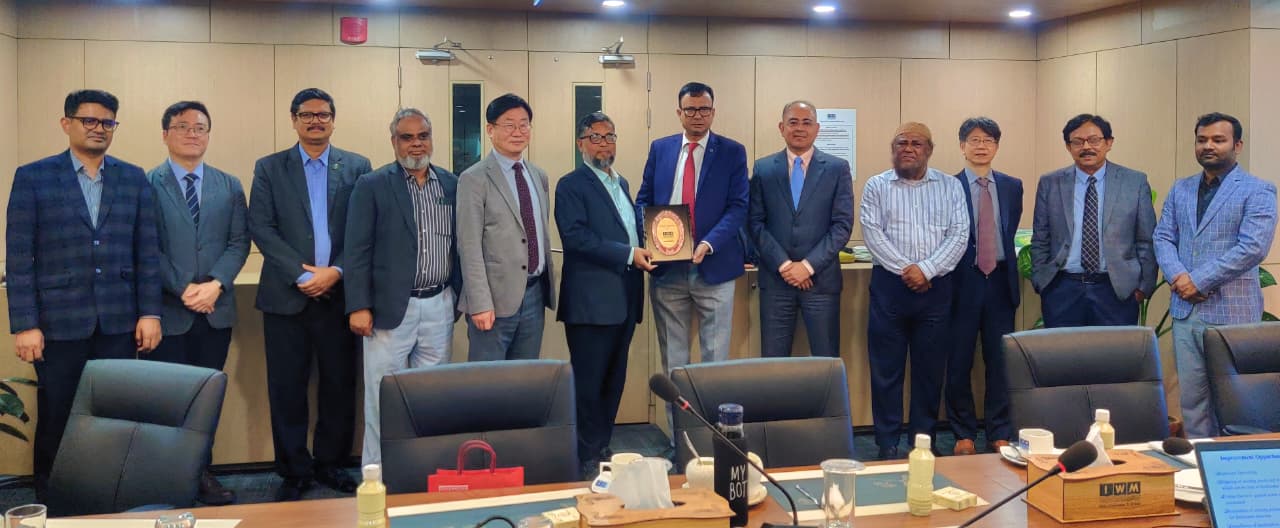
2026-01-20: KEITI and Korean HydroCore Delegates Visited IWM
The Institute of Water Modelling (IWM) hosted a distinguished high-level delegation from the Korea Environmental Industry & Technology Institute (KEITI), under the Ministry of Climate, Energy and Environment of the Republic of Korea, along with senior representatives from the Economic Relations Division (ERD) of the Ministry of Finance, Government of Bangladesh, on 15 January 2026.
The delegation was warmly welcomed by Md. Amirul Islam, Executive Director of IWM. The ERD delegation was led by Mr. A. K. M. Sohel, Additional Secretary and Wing Chief (UN Affairs), accompanied by Ms. Shakera Ahmed, Deputy Secretary, UN-2 Section, and Mr. Md. Juel Mahmud, Green Climate Fund (GCF) Liaison Officer of Bangladesh. The Korean delegation consisted of Mr. Nam Jaehyun, Senior Research Specialist at KEITI; Dr. Bhon K. Koo, Chief Executive Officer of HydroCore; Mr. John Song, Director of HydroCore; and Mr. Rahul Teku Vaswani, Consultant on Climate Change and Sustainability.
The visit marked an important milestone in strengthening international collaboration on climate-resilient development. Discussions focused on Bangladesh’s strategic opportunities under the Green Climate Fund (GCF) Readiness Programme and explored innovative, scalable solutions to address the country’s growing climate challenges. IWM showcased its pioneering work in carbon credit development and nature-based solutions, demonstrating how climate mitigation efforts can be effectively integrated with livelihood improvement and ecosystem restoration.
More Details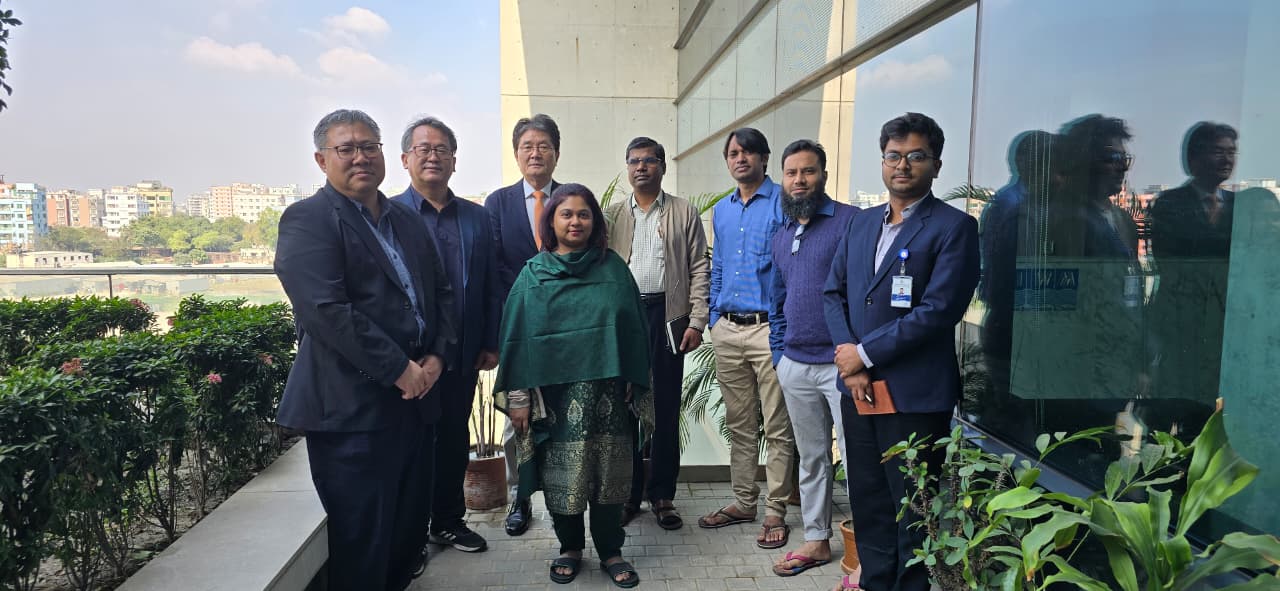
2025-12-21: Korean Delegates Visits IWM to Discuss Urban Flood Forecasting Initiatives in Bangladesh
A delegation from the Republic of Korea, led by Dr. Kyung Taek Yum, Vice Chairman of Korea Engineering Consultants Corporation, paid a visit to the IWM on 17 December 2025 to discuss urban flood forecasting and flood risk reduction initiatives in the Dhaka Metropolitan Area, with particular emphasis on the Buriganga River corridor. The delegation was welcomed by Dr. Mollah Md. Awlad Hossain, Deputy Executive Director (Planning & Development) and Mr. Tarun Kanti Magumdar, Director, Flood and River Basin Management (FRM) Division, along with senior officials of IWM.
More Details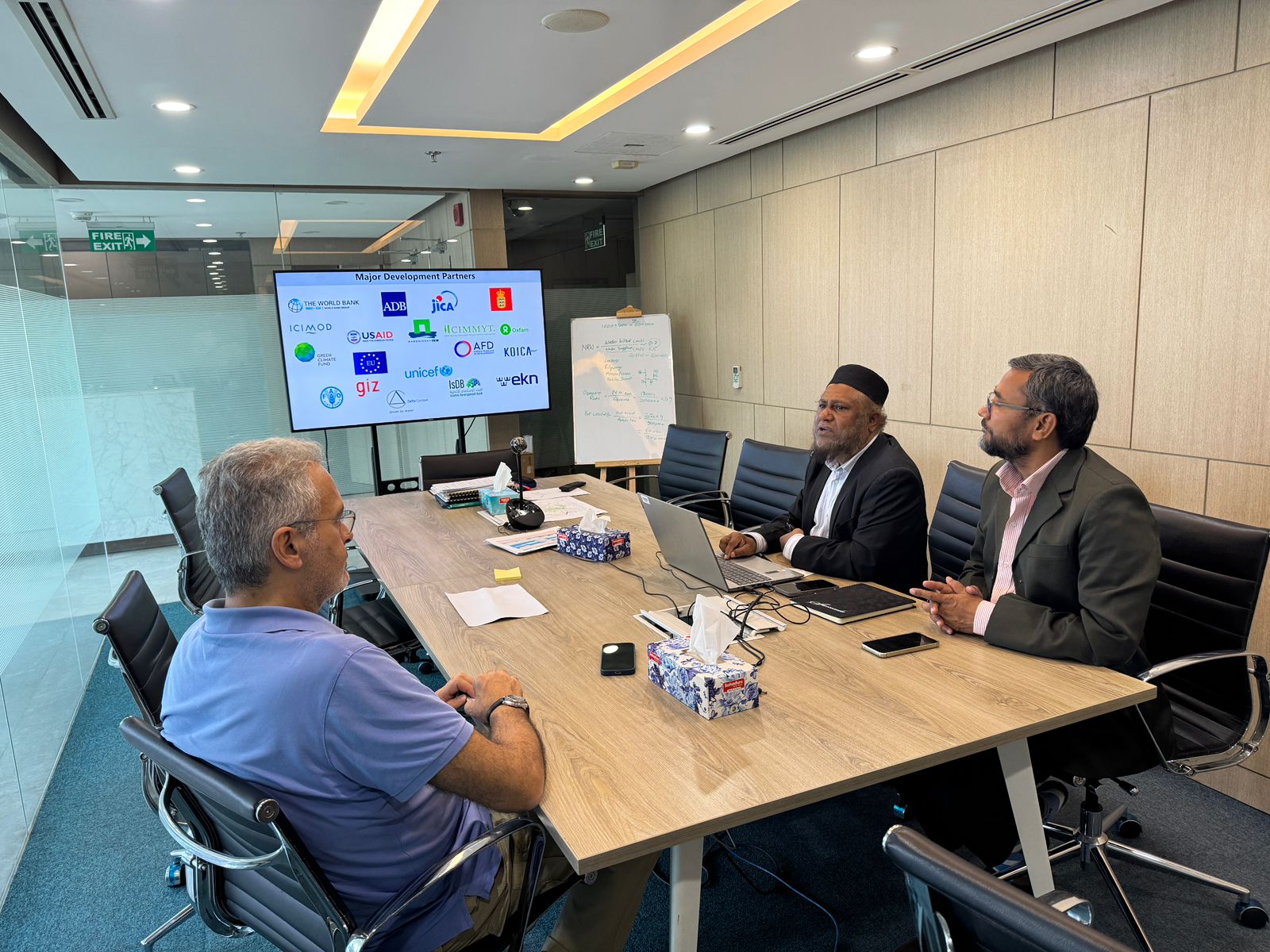
2025-12-21: Strengthening International Partnerships: Dr. Spyros Maroulakis from Greece Visits IWM
Dr. Spyros Maroulakis, Marine Geologist and Technical Director of Terra Marine from Greece, visited IWM on December 17, 2025. His visit focused on discussing the Multi-Beam Survey in Cox's Bazar and exploring opportunities for technical collaboration in marine and riverine projects.
More Details.jpeg)
2025-12-18: IWM Organized a Validation Workshop: Strengthens Bangladesh’s Climate and Disaster Risk Finance Framework under the Global Shield
A national validation workshop was successfully held on Thursday, 11 December 2025, at Pan Pacific Sonargaon, Dhaka, marking a significant milestone in Bangladesh’s engagement with the Global Shield against Climate Risks. The workshop focused on advancing Climate and Disaster Risk Finance and Insurance (CDRFI) interventions to close critical financial protection gaps in the country.
The Global Shield initiative, launched by the G7 and V20 countries at COP27, aims to enhance financial protection for climate-vulnerable nations through pre-arranged, index-based CDRFI mechanisms. In Bangladesh, the initiative seeks to establish a robust national framework to ensure rapid financial response and recovery support following climate-induced disasters.
Since 5 October 2024, the Economic Relations Division (ERD) of the Ministry of Finance has been leading the in-country process, with the Institute of Water Modelling (IWM) providing technical assistance and strategic guidance to the Global Shield Secretariat. As part of this process, the validation workshop titled “Climate and Disaster Risk Finance and Insurance (CDRFI): Interventions for Closing the Financial Protection Gaps in Bangladesh under the Global Shield Request for Support Framework” was organized. The workshop aimed to present and validate the findings of the national Stocktake and Gap Analysis on CDRFI, gather stakeholder feedback on priority interventions, and refine Bangladesh’s Request for Support (RFS) to the Global Shield. Participants included representatives from key government ministries and agencies, development partners, the private sector, civil society organizations, academia, and technical experts.
The event was graced by Dr. Anisuzzaman Chowdhury, Special Assistant to the Hon’ble Chief Adviser, as the Chief Guest. The session was chaired by Mr. Md. Mostafizur Rahman, Secretary, Ministry of Disaster Management and Relief, and Mr. Md. Shahriar Kader Siddiky, Secretary, Economic Relations Division. From the IWM study team, Mr. M Samiun Nabi, Team Leader and Head of Strategic Planning and Business (SPB), presented the Key findings of the Stocktake and GAP analysis of CDRFI.
More Details