News & Events
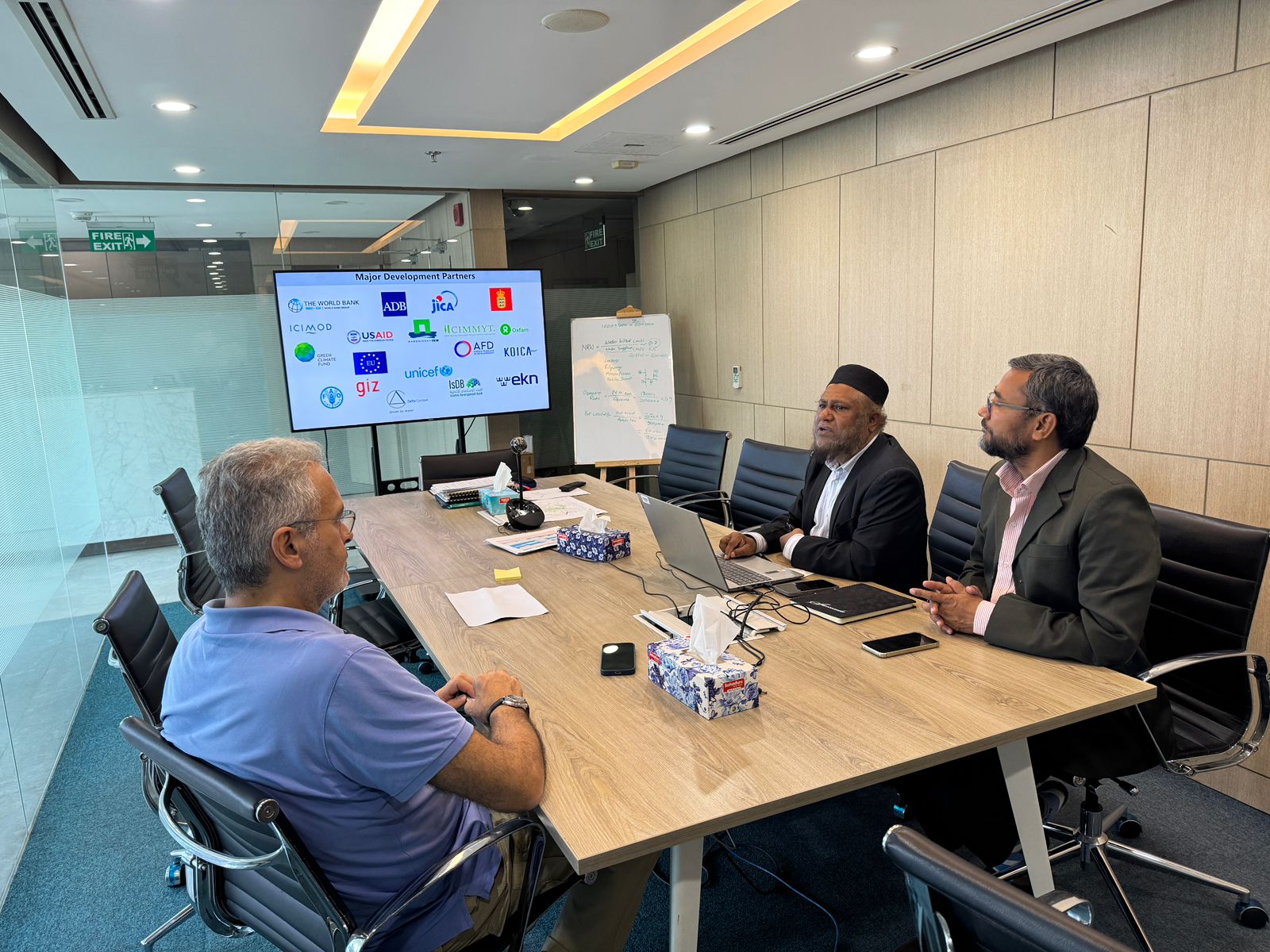
2025-12-21: Strengthening International Partnerships: Dr. Spyros Maroulakis from Greece Visits IWM
Dr. Spyros Maroulakis, Marine Geologist and Technical Director of Terra Marine from Greece, visited IWM on December 17, 2025. His visit focused on discussing the Multi-Beam Survey in Cox's Bazar and exploring opportunities for technical collaboration in marine and riverine projects.
More Details.jpeg)
2025-12-18: IWM Organized a Validation Workshop: Strengthens Bangladesh’s Climate and Disaster Risk Finance Framework under the Global Shield
A national validation workshop was successfully held on Thursday, 11 December 2025, at Pan Pacific Sonargaon, Dhaka, marking a significant milestone in Bangladesh’s engagement with the Global Shield against Climate Risks. The workshop focused on advancing Climate and Disaster Risk Finance and Insurance (CDRFI) interventions to close critical financial protection gaps in the country.
The Global Shield initiative, launched by the G7 and V20 countries at COP27, aims to enhance financial protection for climate-vulnerable nations through pre-arranged, index-based CDRFI mechanisms. In Bangladesh, the initiative seeks to establish a robust national framework to ensure rapid financial response and recovery support following climate-induced disasters.
Since 5 October 2024, the Economic Relations Division (ERD) of the Ministry of Finance has been leading the in-country process, with the Institute of Water Modelling (IWM) providing technical assistance and strategic guidance to the Global Shield Secretariat. As part of this process, the validation workshop titled “Climate and Disaster Risk Finance and Insurance (CDRFI): Interventions for Closing the Financial Protection Gaps in Bangladesh under the Global Shield Request for Support Framework” was organized. The workshop aimed to present and validate the findings of the national Stocktake and Gap Analysis on CDRFI, gather stakeholder feedback on priority interventions, and refine Bangladesh’s Request for Support (RFS) to the Global Shield. Participants included representatives from key government ministries and agencies, development partners, the private sector, civil society organizations, academia, and technical experts.
The event was graced by Dr. Anisuzzaman Chowdhury, Special Assistant to the Hon’ble Chief Adviser, as the Chief Guest. The session was chaired by Mr. Md. Mostafizur Rahman, Secretary, Ministry of Disaster Management and Relief, and Mr. Md. Shahriar Kader Siddiky, Secretary, Economic Relations Division. From the IWM study team, Mr. M Samiun Nabi, Team Leader and Head of Strategic Planning and Business (SPB), presented the Key findings of the Stocktake and GAP analysis of CDRFI.
More Details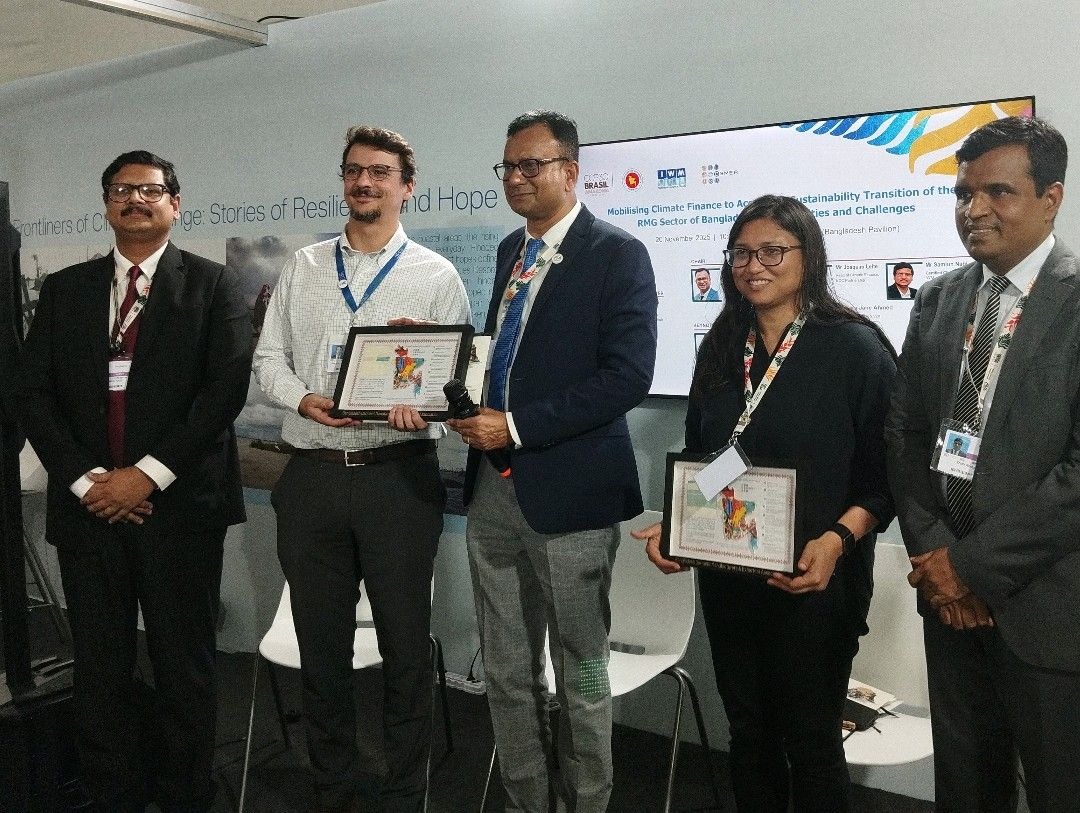
2025-12-14: IWM Participates in COP30, Belem, Brazil, Leads Dialogue on Climate Finance Potential for Bangladesh Apparel Sector
Being the 9th most climate vulnerable country, Bangladesh is regularly facing the ruthless challenges of a rapidly changing climate. But, as a resilient nation, Bangladesh also has some remarkable success stories, which can become a torchbearer for the rest of the world. The garment industry is such a sector for Bangladesh, which generates around 80% exports of the country. Having the largest number of green factories in the world, the Bangladesh RMG sector can also attract carbon finance with such LEED-certified facilities.
Bangladesh currently has 268 LEED-certified garment factories— the highest number in the world. These facilities can generate carbon credits by proving measurable emission reductions through solar installations, energy-efficient systems, and water management. LEED-certified factories typically achieve 35-45% reductions in carbon emissions, 40% in energy savings, and 30% lower energy costs. Such gains can be translated directly into tradable carbon credits on international markets.
Currently, around 50% of the total export is going to the EU region from Bangladesh. But from January 2026, there will be a new scenario regarding the introduction of the Carbon Border Adjustment Mechanism (CBAM). CBAM aims to ensure equal treatment of domestic and imported goods by applying a charge to carbon emitted during the production of imported goods. From January 1, 2026, importers will have to purchase and surrender CBAM certificates corresponding to the emissions embedded in their imports. Carbon price alignment ensures the carbon price paid for imported goods is equivalent to the price paid by EU producers under the EU's Emissions Trading System (ETS). It is going to be introduced to encourage non-EU countries and producers to adopt stricter climate policies and reduce their own emissions and Bangladesh is already going towards that.
Secondly, importers can sign a supplier agreement, where the importer pays a defined “carbon price top-up” to factory owners for verified emissions data and verified reductions (or pays a green premium on the offtake). Investors can finance energy efficiency, fuel switching, rooftop solar, process improvements across LEED factories. Such projects can be registered in Bangladesh too and can be registered under conservative, market-trusted standards (e.g., Verra VCS or Gold Standard) to issue Verified Carbon Units (VCUs) or equivalent. The importer buys the credits (forward offtake) at a premium.
Mr. Nabi stated such optimistic policy intervention suggestions during the panel discussion titled "Mobilizing Climate Finance to Accelerate Sustainability Transition of the RMG Sector of Bangladesh: Opportunities and Challenges". The session was chaired by Mr. A K M Sohel, Additional Secretary of the Economic Relations Division, with a keynote message delivered by Ms. Vidiya Amrit Khan, Vice President of BGMEA, and the keynote presentation was made by Dr. Shah Abdul Saadi, Deputy Secretary, ERD. Other panelists included Mr. Joaquim Leite, Head of Climate Finance at NDC Partnership, and Ms. Sara Jane Ahmed, Managing Director of CVF-V20.
In his deliberation, Mr. Nabi shed some more light on the future carbon finance possibilities in the RMG sector in Bangladesh. He stated that the LEED certified factories can generate credits through a documented process: conducting carbon audits, implementing reduction measures, registering projects with standards like Verra's Verified Carbon Standard or Gold Standard, obtaining independent verification, and selling credits on exchanges such as Xpansiv CBL (New York) or AirCarbon Exchange (Singapore) for trading. "Considering the rapidly changing landscape of climate finance, we need to equip ourselves to access more private funds. It will help us a lot to sail through the challenges ahead," Nabi emphasized.
With Bangladesh committed to reducing greenhouse gas emissions by 20% under its Nationally Determined Contributions (NDC 3.0) and BGMEA targeting a 30% reduction, the policy framework supports carbon market integration. The challenge now is execution—connecting green factories to international carbon finance and transforming environmental leadership into economic advantage. Bangladesh's position as the second-largest apparel exporter with world-leading green infrastructure places it uniquely to turn climate action into a profitable opportunity, panelists concluded.

|
ERD, IWM, BGMEA, and CVF-V20 participated in a session titled “Mobilizing Climate Finance to Accelerate Sustainability Transition of the RMG Sector of Bangladesh: Opportunities and Challenges”. |
2025-12-14: IWM hosted 1st District Level Consultation Meeting under Strategic Environmental Assessment (SEA) Study for the Formulation of MIDA Master Plan

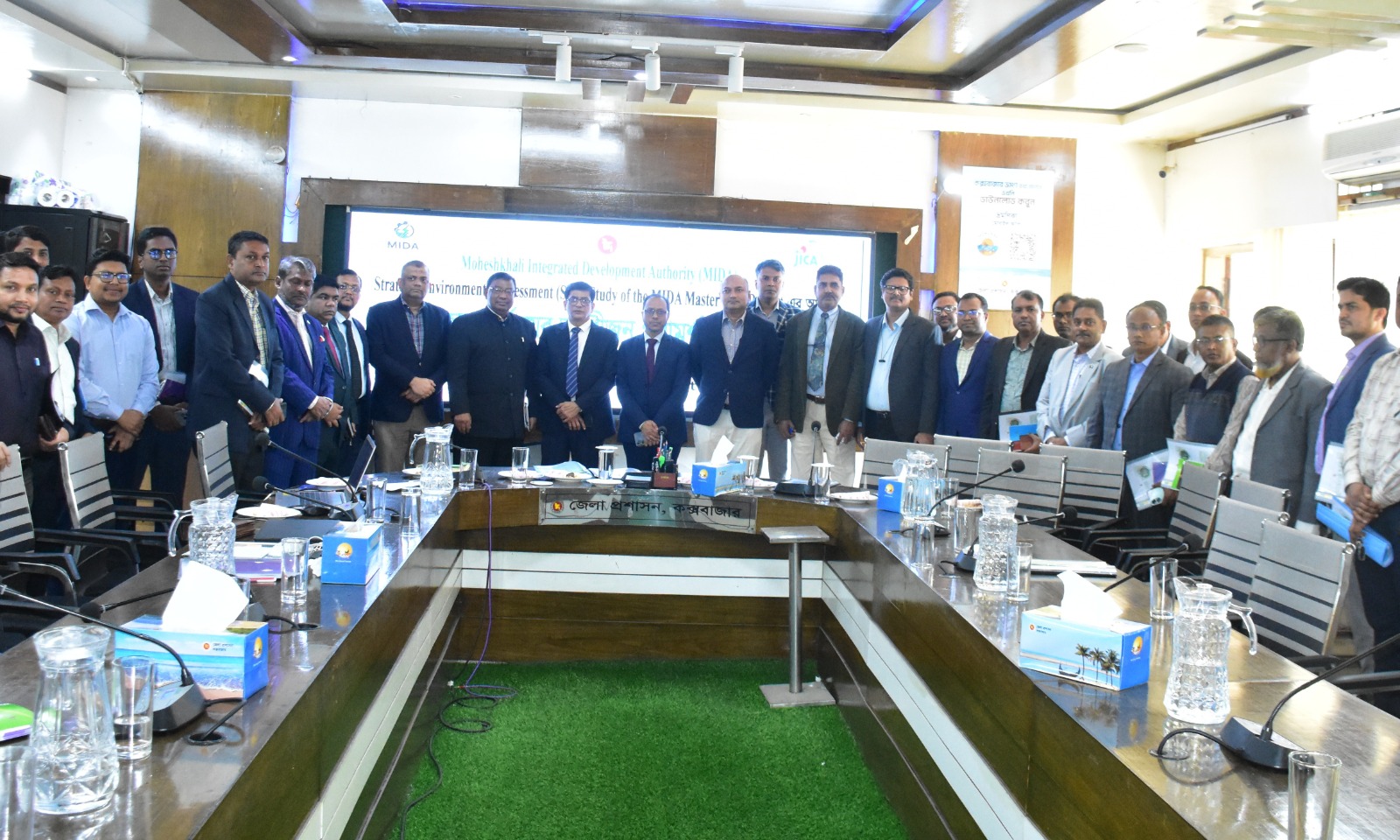
Participants of the meeting along with Md. A. Mannan, Deputy Commissioner, Cox's Bazar and Md. Sarwar Alam, Member, MIDA,
The Institute of Water Modelling (IWM) successfully hosted the inaugural District Level Consultation Meeting in Cox’s Bazar regarding the Strategic Environmental Assessment (SEA) Study for the Maheshkhali Integrated Development Authority (MIDA) Master Plan. Held on December 8, 2025, this high-level meeting was chaired by Md. A. Mannan, Deputy Commissioner, Cox’s Bazar. It included a diverse group of around 40 participants of experts and local government officials.
The session began with an introduction to the MIDA initiative and the scope of the SEA study by Md. Sarwar Alam, Member, MIDA. This was followed by a detailed keynote presentation from Mr. Kh. Khairul Matin, Social Environmental Expert of the IWM study team, who outlined the study’s objectives, risk classifications, and work plan. The subsequent open discussion focused on environmental protection, fisheries sector concerns, infrastructure, and planning.
The expert study team recorded all stakeholder concerns, which will be integrated into the ongoing assessment. Mr. Md. Sarwar Alam delivered the closing remarks, affirming the commitment to a collaborative process that ensures the MIDA Master Plan is both economically beneficial and environmentally sound. From the study team, Mr. M. Samiun Nabi, Head of SPB, Dr. Sheikh Muhammad Abdur Rashid, Natural Environment Expert and Mr. Md. Mainul Islam, Project Coordinator, were also present.
More Details
2025-10-22: Joining of Mr. Md. Amirul Islam as the new Executive Director, IWM
We are pleased to inform you that as per the decision of the 103rd Meeting of the Board of Trustees (BOT) of Institute of Water Modelling (IWM), Mr. Md. Amirul Islam has joined as the new Executive Director of IWM on 22nd October 2025. The former Executive Director, Mr. S. M. Mahbubur Rahman retired from his position on 22nd October 2025.
More Details